


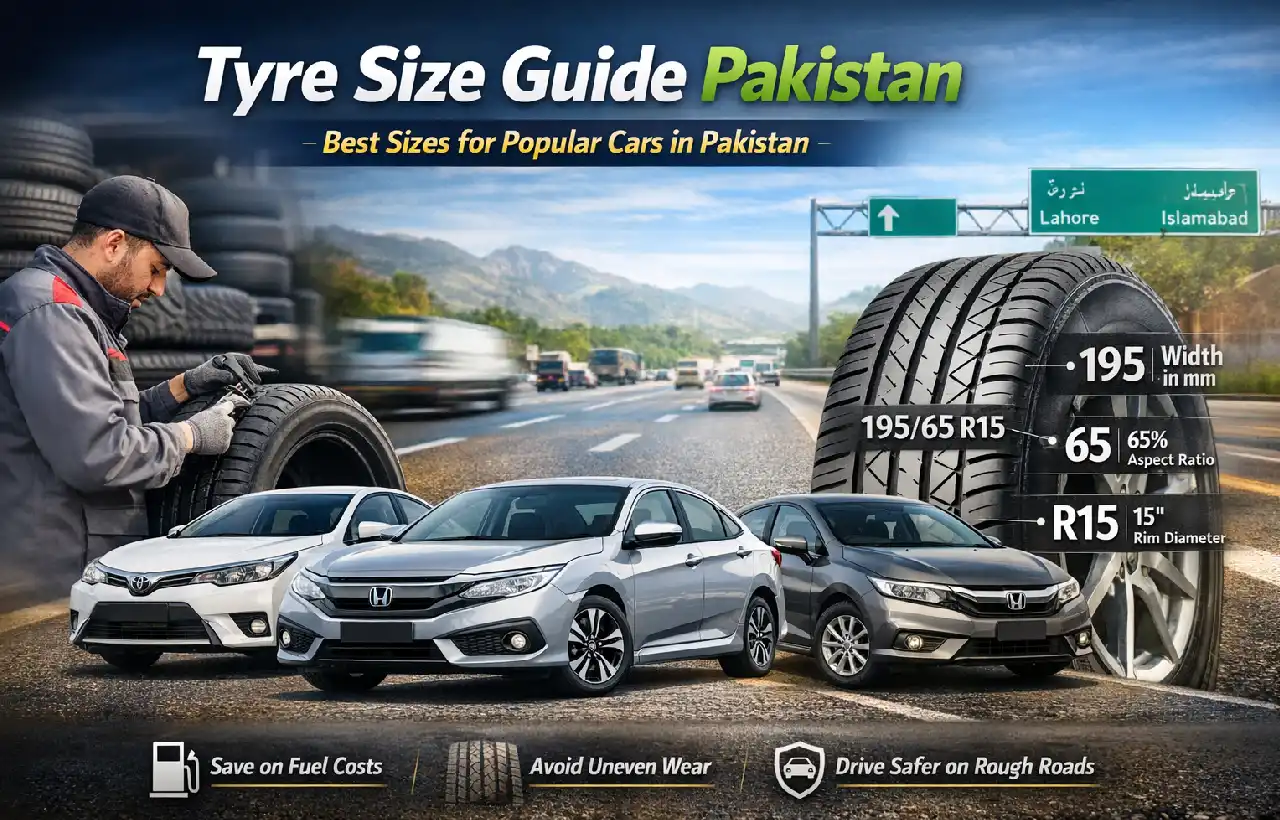
In Pakistan, a clear tyre size guide helps drivers avoid higher fuel costs, uneven tyre wear, and serious safety risks on rough and mixed roads. Drivers who pick tyres by look or price alone often face faster tyre wear, poor ride comfort, and higher fuel bills. For businesses that stock tyres or for drivers who rely on frequent travel between cities like Lahore and Islamabad, a wrong choice adds maintenance costs and downtime that could have been avoided.
There are clear, practical rules that help you pick the right tyre size for city driving, long highway runs, or mixed road conditions in Pakistan. I’ll share straightforward explanations of tyre numbers, the trade-offs between comfort and fuel economy, and how tyre size affects handling on potholed or uneven streets. You’ll get examples for popular models Corolla, Honda Civic, Honda City, and simple decision steps to match tyre size to driving needs and budget. These tips are aimed at helping you buy tyres that last longer, save fuel, and give a safer, more comfortable ride on Pakistani roads.
How Tyre Size Quietly Controls Safety, Comfort, and Fuel Costs
Tyre size changes how your car grips the road and how much fuel it uses. A wider tyre can feel more stable, but may lower the fuel average. A taller tyre can affect your speedometer and gear ratios. On Pakistan’s mix of highways and inner-city streets, the wrong tyre size can make handling worse and wear patterns uneven. That means more money spent on replacements and less confidence behind the wheel.
How to Read Tyre Size
Every tyre has numbers like 195/65R15. The first number is tyre width in millimetres. The second is the aspect ratio, the tyre’s height as a percentage of its width. The R stands for radial construction, and the last number is the rim diameter in inches. Knowing tyre size numbers meaning makes it easy to compare options and choose the best tyre size for cars in Pakistan. If you understand the radial tyre sizing format, you can spot compatible upgrades and avoid mismatches with rims.
Car Tyre Size Chart of Different Models to Understand Their Importance
A car tyre size is a standardized code that describes the dimensions of a tyre. It gives you width, aspect ratio, and rim diameter and ensure the right fit for your vehicle. Reading the code correctly matters because using the wrong size can affect fuel efficiency, handling, and safety. The chart below covers common tyre sizes used across hatchbacks, sedans, SUVs, and light trucks.
| Car model | Engine | OEM tyre size | Rim | Approx. tyre price (PKR) | Type |
|---|---|---|---|---|---|
| Mini / Economy Hatchbacks | |||||
Suzuki Alto VX / VXR / VXL (660cc) | 660cc | 145/80 R13 | 13″ | ₨ 9,000 – 14,000 | Hatchback |
Suzuki Mehran VX / VXR (800cc, discontinued) | 800cc | 145/70 R12 | 12″ | ₨ 8,000 – 12,000 | Hatchback |
United Bravo / Prince Pearl 660 cc city cars | 660cc | 145/70 R12 | 12″ | ₨ 8,000 – 11,500 | Hatchback |
Suzuki Wagon R VXR / VXL / AGS (1000cc) | 1000cc | 165/70 R13 | 13″ | ₨ 10,000 – 16,500 | Hatchback |
Suzuki Cultus VXR / VXL / AGS (1000cc) | 1000cc | 165/65 R14 | 14″ | ₨ 11,000 – 17,500 | Hatchback |
Suzuki Swift GL / GLX (1200cc) | 1200cc | 185/55 R15 | 15″ | ₨ 13,000 – 19,000 | Hatchback |
KIA Picanto 1000cc city hatchback | 1000cc | 165/65 R14 | 14″ | ₨ 11,000 – 16,000 | Hatchback |
| Sedans | |||||
Honda City 1200cc / 1500cc (2015–2024) | 1200–1500cc | 185/65 R15 | 15″ | ₨ 13,500 – 17,000 | Sedan |
Toyota Yaris GLI / ATIV (1300–1500cc) | 1300–1500cc | 185/65 R15 | 15″ | ₨ 13,000 – 18,000 | Sedan |
Changan Alsvin 1500cc compact sedan | 1500cc | 195/55 R15 | 15″ | ₨ 14,000 – 19,000 | Sedan |
Toyota Corolla GLI / XLI / Grande (1600–1800cc) | 1600–1800cc | 195/65 R15 | 15″ | ₨ 12,500 – 18,000 | Sedan |
Honda Civic 1500cc Turbo (2022–2026) | 1500cc Turbo | 205/55 R16 | 16″ | ₨ 14,000 – 20,000 | Sedan |
| SUVs / Crossovers | |||||
KIA Sportage FWD / AWD (2000cc) | 2000cc | 235/55 R18 | 18″ | ₨ 22,000 – 35,000 | SUV |
Hyundai Tucson 2000cc FWD / AWD | 2000cc | 235/60 R18 | 18″ | ₨ 24,000 – 38,000 | SUV |
MG HS 1500cc Turbo crossover | 1500cc Turbo | 215/55 R17 | 17″ | ₨ 19,000 – 28,000 | SUV |
Honda BR-V 1500cc 7-seat crossover | 1500cc | 205/65 R16 | 16″ | ₨ 15,000 – 22,000 | SUV |
| 4×4 / Pickup / Luxury SUV | |||||
Toyota Fortuner 2700cc Petrol / 2800cc Diesel | 2700–2800cc | 265/60 R18 | 18″ | ₨ 30,000 – 55,000 | 4×4 SUV |
Toyota Hilux Revo 2800cc Diesel pickup | 2800cc | 265/65 R17 | 17″ | ₨ 28,000 – 50,000 | Pickup |
Toyota Land Cruiser 4000–4500cc (V6 / V8) | 4000–4500cc | 285/60 R18 | 18″ | ₨ 45,000 – 90,000 | 4×4 SUV |
Prices for tyres in Pakistan vary considerably based on the type of vehicle and model, including Honda City tyres (ECO) ranging from 11500-16,000 PKR. Corolla tyres ranging from 12,500 to 18,000 and Civic tyres that range from 14,000 to 20,000. For commuters in cities looking for affordable alternatives, local brands such as GTR as well as Chinese brands such as Linglong as well as Sailun are popular options, as premium brands such as Michelin, Bridgestone, and Yokohama offer drivers the highest level of quality and durability.
Note: The above listed prices in table is frsh one according to May 7, 2026. Tyre prices of different brands change daily due to multiple factors such as import costs, currency exchange rates, raw material prices, stock availability, market demand, and company pricing policies. To mitigate this situation, We recommend you to call Saif Traders’ representative directly so you can get the latest pricing information on a daily basis.
Where Most Drivers Go Wrong When Choosing Tyre Size
People often pick a visually larger tyre or upgrade without checking compatibility. That can cause rubbing, poor handling, or wrong speedometer readings. Others choose sizes that reduce comfort on bumpy roads because they chase sportier looks. For many drivers in Lahore and other cities, comfort and fuel economy matter more than looks. A factory recommended tyre size is usually the safest starting point.
Why Factory Tyre Sizes Are Still the Safest Choice for Most Cars
For daily city driving and mixed-use vehicles, factory recommended tyre size usually gives the best balance of comfort, durability, and fuel economy. It matches the car’s suspension, wheel well clearance, and gearing. If you want a simple, reliable choice that limits risk, keep to standard tyre sizes for cars. This is especially true if your driving includes frequent short trips, heavy traffic, and rough patches.
When a Tyre Size Upgrade Actually Improves Your Drive
A tyre size upgrade vs stock size can help if you want better grip, a slightly sportier feel, or if you need a wider tyre for heavier loads. Upgrades are common for drivers who mostly use highways and want more stability at higher speeds. Always check the tyre size compatibility guide and confirm rim size, tyre width profile and rim size match. A good tyre shop can suggest safe options without sacrificing comfort or causing rubbing.
How the Right Tyre Size Protects Your Fuel Average
If saving fuel matters, pick a tyre with a moderate width and a higher aspect ratio. Narrower tyres roll more easily and often improve fuel economy. Avoid very wide tyres for long-distance commuting between cities. For drivers who travel long stretches of motorway, consider tyres designed for low rolling resistance, like the Original Tyres Available in Lahore, which help keep fuel costs down over time.
Comfort vs Grip: Choosing What Works Best on Pakistani Roads
A higher sidewall (larger aspect ratio) helps absorb bumps and potholes. That gives a smoother ride on rough streets. But too tall a sidewall can reduce cornering sharpness. For comfortable daily driving in Pakistan, aim for a size that balances tyre size for comfort and grip. For small cars and hatchbacks, this often means keeping close to factory specs.
Five Quick Checks That Help You Choose the Right Tyre Size
- Check the owner’s sticker or manual for the factory recommended tyre size.
- Match rim diameter exactly (rim size in inches).
- Keep the aspect ratio close to the original to avoid speedometer errors.
- If upgrading, confirm tyre width profile and rim size compatibility.
- Ask about the tyre size effect on fuel average before choosing wider tyres.
What Most Corolla, Civic, and City Owners Choose
- Toyota Corolla: Most Corollas use tyre sizes that balance comfort and economy. Sticking close to factory recommended tyre size keeps the fuel average reasonable and gives stable handling on highways.
- Honda Civic: Civic owners often prefer a slightly wider tyre for better grip. A careful upgrade can improve cornering, but check the tyre size compatibility guide for rim and wheel well clearance.
- Honda City: City driving needs comfort and durability. A moderate width with a slightly higher aspect ratio helps absorb inner-city potholes and gives a smoother ride.
These examples reflect the typical choices buyers make in Pakistan’s cities and highways.
The Direct Link Between Tyre Size, Safety, and Control
Changing the tyre diameter changes the overall circumference. That shifts the speedometer reading and affects gear ratios slightly. Wider tyres can reduce aquaplaning risk but may lower fuel economy. Taller tyres can increase ground clearance, which helps on rough roads, but may stress suspension components if too large. Always check how a size change influences safety systems like ABS or traction control.
Choosing Tyres That Handle Traffic, Rain, and Rough Streets
In busy urban areas, tyres with good wet grip and a durable tread compound help. For mixed city-highway use, look for tyres that advertise long tread life and low rolling resistance. These choices support everyday reliability and save money over time on replacements and fuel.
Matching Tyres and Rims the Safe Way
Rim diameter must match the tyre’s rim size number. Also, check the rim width recommendations for the tyre width you want. Mismatched tyre width and rim size lead to poor tyre seating and uneven wear. If you plan to change rim size, consider how it changes tyre aspect ratio and overall diameter.
Simple Upgrade Limits That Keep Your Car Safe
- Limit overall diameter change to within 3% of the original.
- Keep aspect ratio adjustments small to avoid speedometer and ABS issues.
- Confirm the tyre size numbers’ meaning before ordering online.
- Use a trusted tyre seller to check fitment and compatibility.
What to Check Before Spending Money on New Tyres
Look for trusted brands with clear specs. Read reviews for performance in wet and dry conditions. Compare compound and tread patterns based on your main use: city, highway, or mixed. For fuel-conscious buyers, check the tyre size’s effect on fuel average in tests or user reviews. When in doubt, consult a reputable tyre retailer for suggested sizes that match vehicle load and local road conditions.
Simple Scenarios That Point You to the Right Tyre
- Mostly city driving, potholes: Choose a higher aspect ratio close to factory size for comfort.
- Mostly highway and long-distance: Choose a tyre optimised for low rolling resistance and stable handling.
- Want better grip and sportier feel: Consider a moderate width upgrade, but confirm compatibility.
How Saif Traders Helps You Choose the Right Tyre Size
Saif Traders stocks tyre models suitable for Pakistani roads and can recommend sizes based on your car model and driving needs. While there is no installation or repair service, Saif Traders provides clear fitment advice so you know which tyre sizes work best for Corolla, Civic, City, and other popular models.
Final Checks That Protect You From Bad Tyre Purchases
- Verify the tyre size matches the rim diameter exactly.
- Confirm the tyre’s load and speed rating fits your car.
- Check the tyre’s manufacturing date to avoid old stock.
- Compare tread warranty and expected life.
These small checks reduce the chance of returns and help you buy a tyre that lasts.
Making a Confident Tyre Choice Starts with the Right Size
Start with the factory recommended tyre size. Decide if you need comfort, fuel savings, or grip. Use the tyre size compatibility guide when considering upgrades. When ready to buy, choose a tyre with the right balance of tread life and rolling resistance for Pakistan’s roads. Clear, deliberate choices save money and keep you safer on the road.
Frequently Asked Questions
Q1. What does 195/65R15 mean?
195 is the width in mm, 65 is the aspect ratio (height is 65% of the width), R means radial, and 15 is the rim diameter in inches.
Q2. Can I put wider tyres on my car?
Yes, within limits. Wider tyres can improve grip, but can lower fuel average and need rim compatibility checks.
Q3. Will changing tyre size affect my speedometer?
Yes. If the overall tyre diameter changes, speedometer and odometer readings will shift.
Q4. Is a taller tyre better for potholes?
A taller tyre (higher aspect ratio) usually gives more cushion and a smoother ride over potholes.
Q5. Do wider tyres always give better grip?
Wider tyres can increase grip but may reduce fuel average and affect handling if too wide.
Q6. Should I always use factory recommended tyre size?
Factory size is safe for most drivers, giving a balance of comfort, safety, and fuel economy.
Q7. How does tyre size affect fuel average?
Narrower tyres typically reduce rolling resistance and can improve fuel economy compared to very wide tyres.
Q8. Are tyre upgrades legal in Pakistan?
Upgrades are allowed if they do not cause safety or emissions issues. Keep changes within recommended fitment limits.
Q9. How often should I replace tyres in Pakistan?
Replace when tread depth nears legal limits, or if there is visible damage, uneven wear, or after 5–7 years, depending on use.
Q10. What should I check before buying tyres online?
Check the exact tyre size, load and speed rating, manufacturing date, and seller return policy.